
Most people picture something complicated — and then watch the whole thing take less time than a pizza delivery. A backflow test visit is a short, tidy procedure: the tester works through a fixed sequence with a gauge, your water is off for only a few minutes at the assembly itself, and you get the result before anyone leaves. Here's exactly what happens, so there are no surprises.
Before the visit, there's very little to do. Make sure the assembly is accessible — clear of stored items, overgrown landscaping, and locked gates. Know where it is: usually a brass device on the side of the house or in a valve box near where the irrigation branches off. If you received a letter from the PUD about the test, have it handy — it tells the tester what's being asked for. That's the whole prep list.
One more reassurance for first-timers: nothing about the visit modifies your plumbing. No pipes are cut, no fittings are replaced, nothing gets reconfigured. The tester touches the test cocks and the shutoff valves, takes readings, and leaves everything exactly as it was — plus a filed report. (Got the letter and not sure what it means? Our compliance guide explains it.)
You don't strictly need to be home as long as the tester can reach the assembly — but being there means you hear the result firsthand and can ask questions. If you need backflow testing in Lake Stevens, WA, here's the visit step by step.
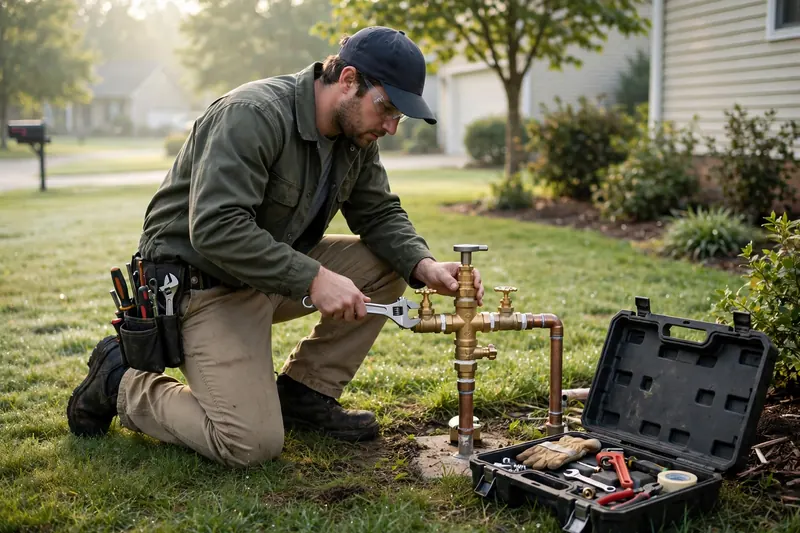
The Visit, Step by Step
1. Identify and assess
The tester confirms the assembly type — PVB, DCVA, or RPBA — checks that it's an approved model, and notes the incoming line pressure. This takes a couple of minutes and determines which test procedure follows.
2. Brief water shutoff
The water is shut off at the assembly's own shutoff valves — not your main. The house keeps its water; only the assembly's branch goes quiet. This is the part people worry about, and it's the shortest part of the visit.
3. Flush, attach, measure
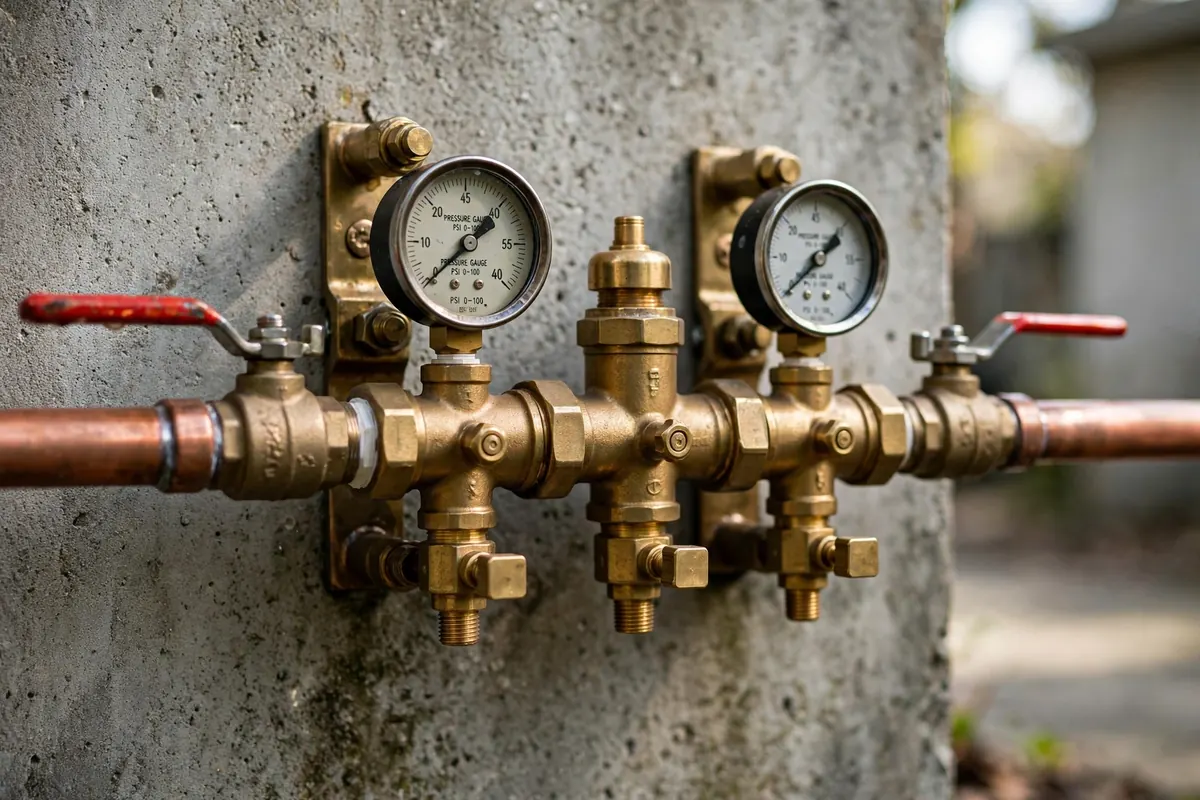
Each test cock is flushed to clear debris, then the calibrated differential-pressure gauge is attached with hoses. The tester works through the check valves in sequence — tightness and differential on each, the relief valve's opening point on RP assemblies, the air inlet on PVBs — recording every reading.
4. Restore and report
Water goes back on, the gauge comes off, and the test report is completed: assembly details, initial and final readings, kit serial and calibration date, tester credentials. You hear pass or fail on the spot, in plain English — and the report is filed with Snohomish County PUD. If it failed, the tester explains what went wrong and what the next steps are. Total time for a standard residential visit: usually well under an hour.
Questions About This Topic
Do I need to be home for the test?
Not strictly — the tester only needs access to the assembly. But being home means you get the result firsthand and can ask about anything the tester noticed. If you can't be there, just make sure gates are unlocked and the device is reachable.
How long will my water be off?
Only a few minutes, and only at the assembly's branch — the house itself is unaffected. The shutoff lasts exactly as long as the gauge measurements take.
What should I do to prepare?
Three things: clear access to the assembly, unlock any gates, and have the PUD's letter handy if you received one. That's it — no digging, no paperwork to fill out, nothing to buy.
Will I get paperwork afterward?
Yes. The formal test report is filed with Snohomish County PUD as your compliance record, and you keep a copy. File it with your home records — it's your proof of compliance for the year. Want the bigger picture first? Start with how backflow testing works.
What if my assembly is buried or hidden?
It needs to be accessible — that's actually a requirement, since the tester has to reach the test cocks every year. If landscaping has swallowed it, uncover it before the visit. If you genuinely can't find it, tell us when you schedule; locating it is part of the job.
Can I watch the test?
Yes — you're welcome to. Most testers are happy to explain what they're doing as they go, and it's a good way to learn what your assembly is and how it's doing. If you can't be there, the report itself is the backup — every reading is recorded, and we're happy to walk through it by phone afterward. Just give them room to work around the gauge hoses.
Need Backflow Help?
Call FlowGuard — tell us what's going on and we'll take it from there.