
FlowGuard — Annual Test
Backflow Testing
Backflow testing is the annual check Washington requires on the assemblies that keep your drinking water separate from everything downstream of them — irrigation lines, pools, boilers, and other cross-connections. Snohomish County PUD, which runs the Lake Stevens water system, requires the test every year at the owner's expense, following state rule WAC 246-290-490. Testing is also required any time an assembly is installed, repaired, reinstalled, or relocated.
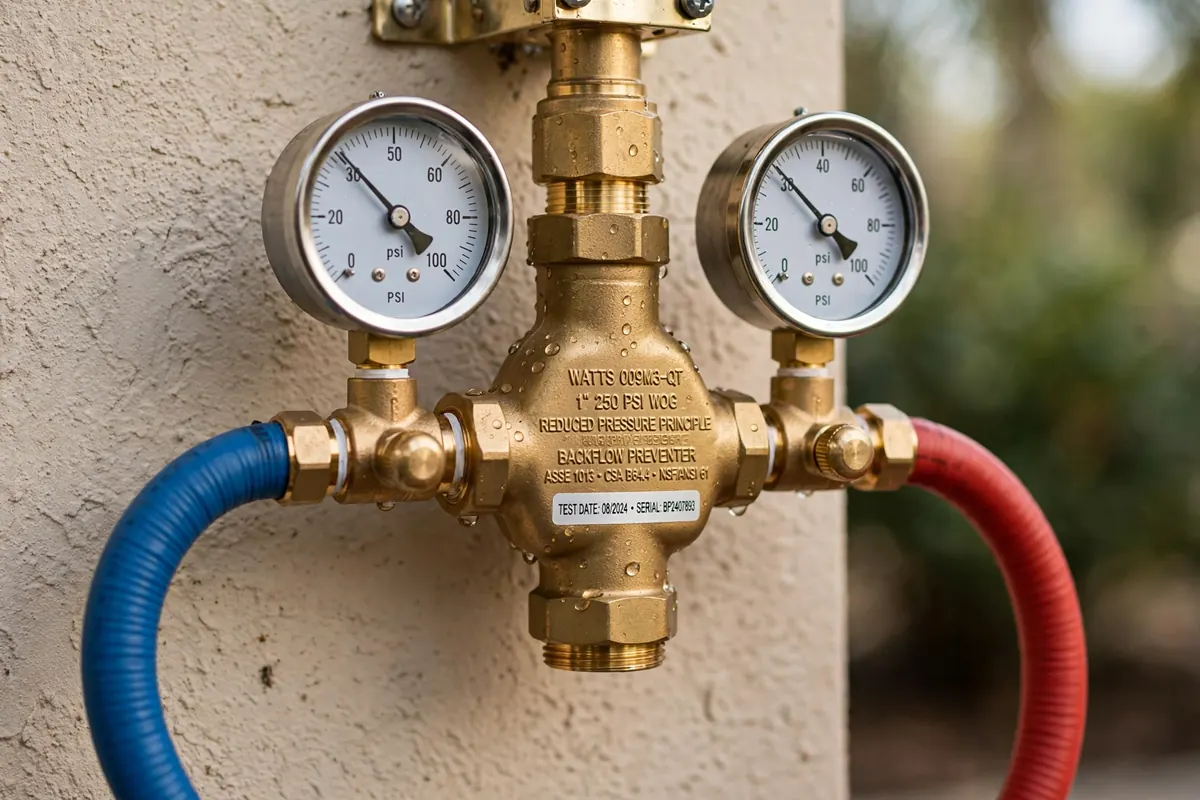
If you need backflow testing in Lake Stevens, WA, here's what FlowGuard does: identify your assembly — usually a pressure vacuum breaker, double-check valve assembly, or reduced-pressure assembly — run the full field test with a calibrated differential-pressure gauge, explain the results in plain English, and file the test report with the PUD. One visit, documented and done. The filed passing report is also what provides your backflow certification for the year.
One more thing worth knowing: the test is quick, but the paperwork matters. The report we file includes the assembly's make, model, and serial number, every reading from the gauge, and the test kit's calibration details — it's a legal record of compliance, not just a receipt. Keep your copy where you can find it.
FlowGuard — Annual Test
How Backflow Testing Works
- Identify the assembly
The tester confirms which assembly protects your system — PVB, DCVA, or RPBA — checks that it's an approved model, and notes the incoming line pressure. Knowing the exact assembly matters, because each type is tested differently.
- Shut off and set up
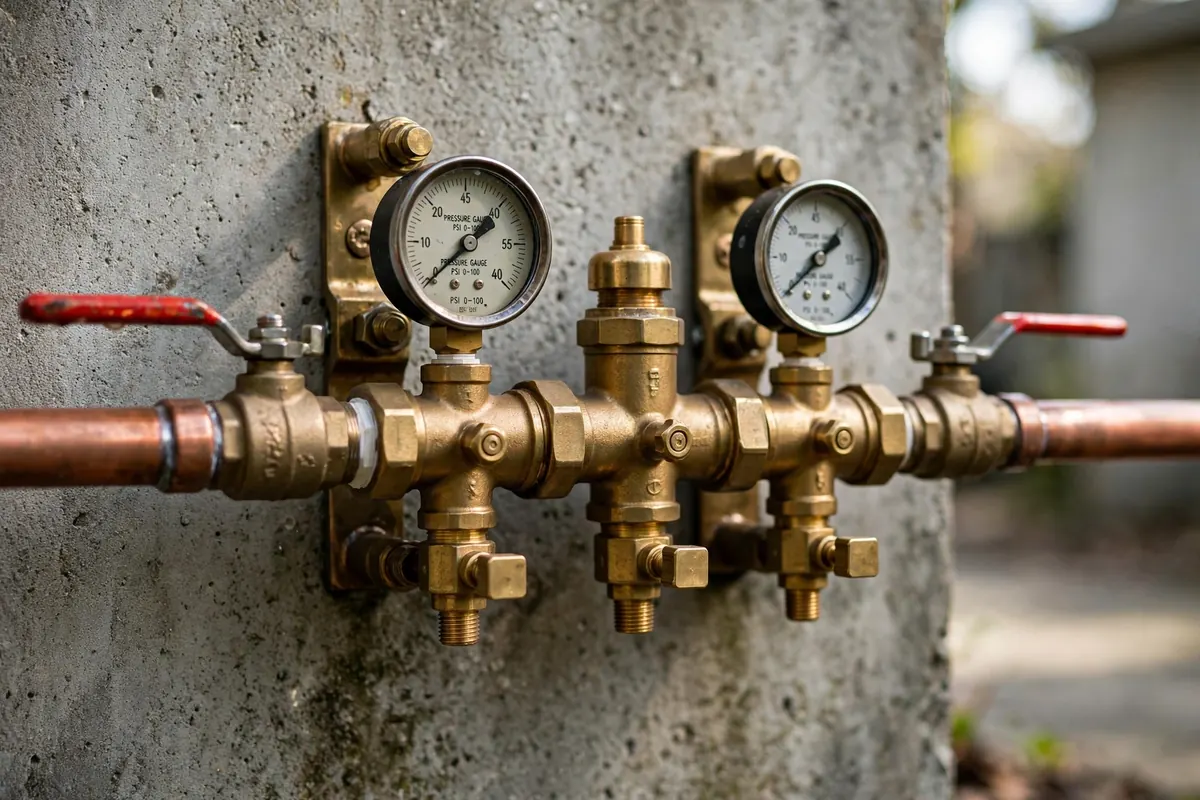
Water is shut off briefly at the assembly's own shutoff valves — not at your main — so the rest of the house is unaffected. The tester flushes each test cock to clear debris, then attaches the calibrated test gauge.
- Run the field test
Each check valve is tested for tightness and differential pressure — a double-check valve's checks must each hold at least 1.0 psi. On reduced-pressure assemblies the relief valve's opening point is measured; on pressure vacuum breakers, the air inlet. Every reading is recorded.
- Report and file
The test report is completed on site — assembly details, readings, gauge serial and calibration date, tester credentials — and filed with Snohomish County PUD. You hear pass or fail immediately, in plain language, before we leave.
FlowGuard — Annual Test
Backflow Testing — What to Expect
Here's what to expect on the day. The water feeding your assembly is off for only a short stretch while the tester works through the test cocks; most residential visits finish well under an hour. There's no digging and no mess — assemblies are installed to be accessible for exactly this purpose, and all we ask is clear access to the device.
If the assembly passes, you're set until next year's test. If it fails, the tester will tell you what went wrong and whether it looks like a repair or a replacement — and what the next steps after a failed test look like. Either way, you won't be left guessing.
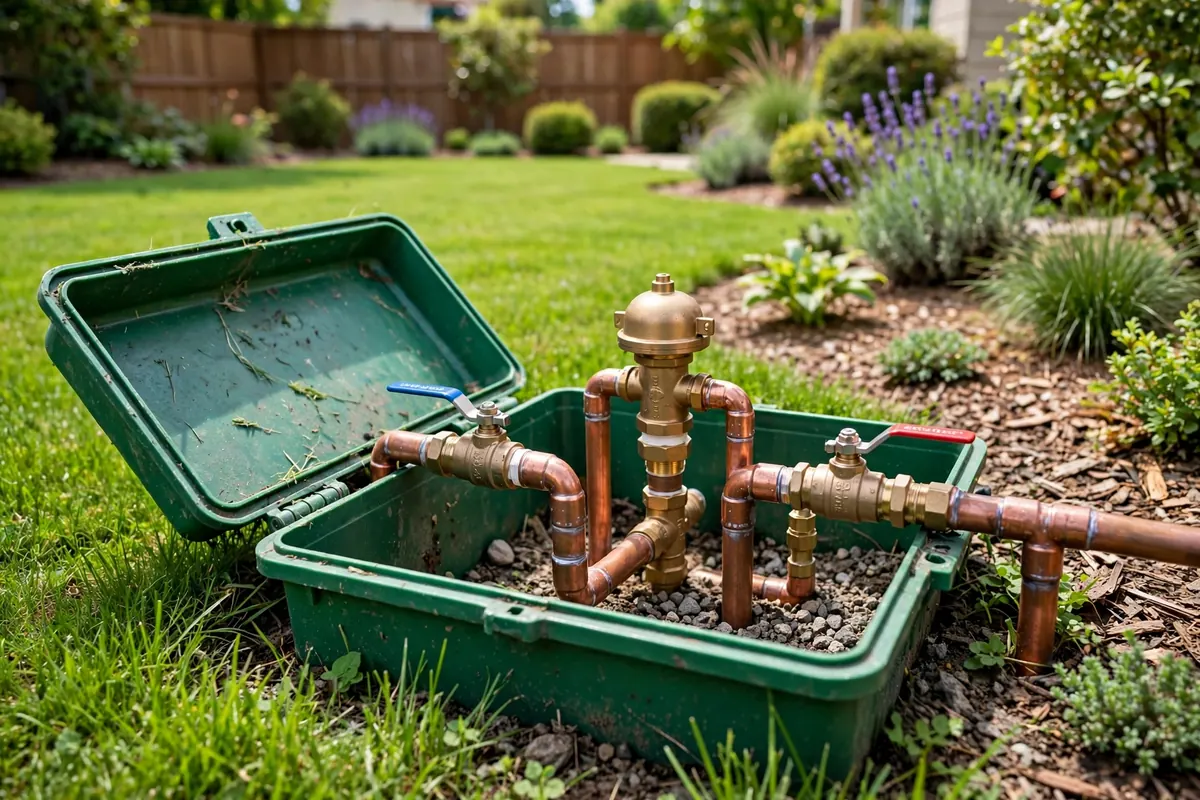
New to the area, or just bought a home with an irrigation system? Most Lake Stevens homeowners meet their backflow assembly for the first time at the first annual test. We'll identify the device, explain what it does, and get you on the annual cycle — see where we work.
Backflow Testing — FAQs
What does the tester actually do during the test?
The tester works through a fixed procedure: identify the assembly, note line pressure, shut the water at the assembly's valves, flush the test cocks, and attach a calibrated differential-pressure gauge. Then each check valve is measured for tightness and differential — plus the relief valve on RP assemblies and the air inlet on PVBs. The readings go on a formal report that gets filed with the PUD.
Does my irrigation system need a backflow assembly at all?
If Snohomish County PUD's cross-connection inspection flagged one for your service, yes. The PUD's service agreement requires an approved device plus annual testing at the owner's expense whenever irrigation, a pool, a boiler, a fire sprinkler, a booster pump, hydronic heating, or a similar hazard exists. Most Lake Stevens homes with sprinklers have one.
My assembly is an AVB — does it need annual testing?
No. The atmospheric vacuum breaker is the one common irrigation device the state rule does not require to be field-tested each year — it must be inspected at installation, after repairs, and after a backflow incident instead. If you're unsure which device you have, we can identify it during a visit.
Who files the test report — me or the tester?
The tester completes the report and files it with the water purveyor — in Lake Stevens, that's Snohomish County PUD. Keep your own copy with your home records; it's your proof of compliance if the PUD ever asks about your assembly.
How do I know when my test is due?
The PUD's correspondence goes to the property owner, so the notice itself usually says. If you can't find it, check your last filed test report — the annual cycle runs from the last test date. When in doubt, schedule it: an early test simply resets the clock, and there's no penalty for testing ahead of schedule.
What should I do to prepare for the visit?
Very little. Make sure the assembly is accessible — clear of stored items, overgrown landscaping, and locked gates — and have the PUD's letter handy if you received one. That's the whole prep list: no digging, no paperwork to fill out, nothing to buy.