
You open an envelope — or an email — from Snohomish County PUD, and it's about your backflow preventer. First reaction for a lot of homeowners: is this a scam? It's not. The PUD is your water purveyor — the utility that delivers your drinking water — and it runs the cross-connection control program for the Lake Stevens system. When it writes to you about your assembly, it's doing its job under state rule WAC 246-290-490.
Here's the plain-English version of that rule. Washington requires the water purveyor to make sure every backflow assembly protecting the public system gets tested by a certified tester: when it's installed, repaired, reinstalled, or relocated; after a backflow incident; and every year after that. In practice, purveyors pass the testing duty — and the cost — to the property owner. That's why the PUD's service agreement says annual testing at the owner's expense wherever a cross-connection hazard exists: irrigation, pools, boilers, fire sprinklers, booster pumps, hydronic heating, and the rest.
So the letter usually means one of three things: your annual test is due (or overdue), the PUD has no test report on file for your assembly, or a new device was registered to your service and needs its initial test. None of these are emergencies — but none of them go away on their own, either. If you need backflow testing in Lake Stevens, WA, the move is simple: schedule the test, get the report filed, and you're done for the year.
What the Letter Means and What to Do About It
Start by reading the notice carefully. It should identify the assembly or the service address it concerns and say what's being asked — typically a test by a certain date or a missing report. If anything is unclear, call the PUD at 425-397-3000 and ask; a five-minute call beats guessing.
Find your assembly
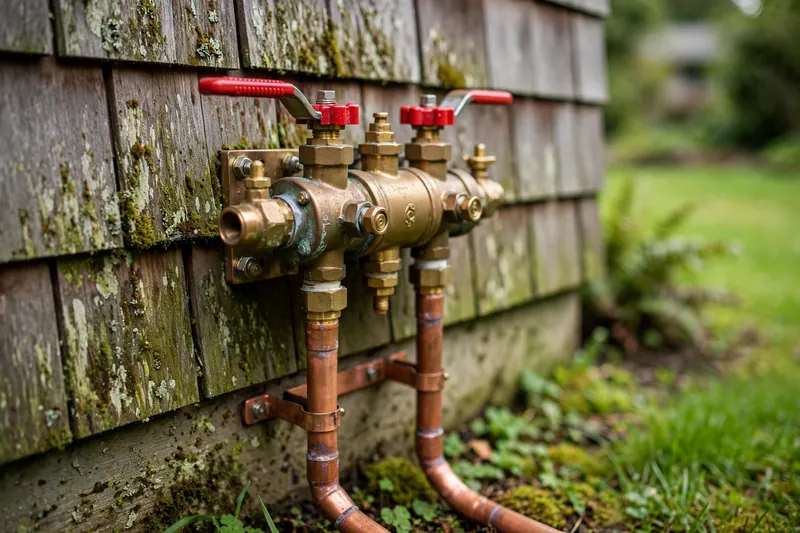
Most Lake Stevens letters concern irrigation assemblies — usually a pressure vacuum breaker on the side of the house or in a valve box near where the irrigation branches off. Knowing where it is (and that it's accessible, not buried behind the shed) makes the visit smooth.
Schedule the test
Call (425) 548-1928 and mention the letter. The tester runs the full field test, completes the report, and files it with the PUD — which is what the notice is really asking for. You'll hear the result on the spot, and our test-visit walkthrough shows exactly what happens when we arrive.
What if you ignore it
The PUD's escalation path runs from notices toward disconnection of your domestic water service until the hazard is controlled. Washington's rule authorizes shutoff for noncompliance — not fines. The letter is the cheap, easy stage of this process; everything after it is more expensive and more annoying. A single test visit ends it.
Questions About This Topic
Is this letter a scam?
No — but your skepticism is healthy. Snohomish County PUD is the real water purveyor for Lake Stevens, and cross-connection notices are a normal part of its program. If you're unsure about a specific letter, call the PUD directly at 425-397-3000 rather than using any number printed on the notice.
I don't have an irrigation system — why did I get this?
Irrigation is the most common trigger, but not the only one. Pools, boilers, hydronic heating, fire sprinklers, booster pumps, and auxiliary water sources all count as cross-connection hazards under the PUD's program. If any of those exist on your property, the assembly — and the annual test — follow.
I lost the letter. What now?
Nothing is lost. The obligation doesn't depend on the piece of paper — if you have an assembly, it needs its annual test and a filed report regardless. Just schedule the test; the filed report is what the PUD's records need.
Does the City of Lake Stevens send these too?
No. The PUD is the water purveyor and runs the cross-connection program — not the city. If a notice about your backflow assembly arrives, it's from Snohomish County PUD.
What if I rent out the property?
The testing obligation follows the property, so it stays with you as the owner — not the tenant. Let your tenants know a tester will need access to the assembly, or coordinate the visit for a time you're there. The filed report goes in your records, not theirs.
Can the PUD really shut off my water over this?
Yes. State rule WAC 246-290-490 requires the purveyor to act on noncompliance — including denying or discontinuing service until the hazard is controlled. It's not a fine; it's a shutoff. Which is exactly why the letter deserves a prompt response, not a drawer.
Need Backflow Help?
Call FlowGuard — tell us what's going on and we'll take it from there.