
A leaking backflow preventer is trying to tell you something — and different leaks say different things. Water dripping only when a zone runs, a relief valve steadily discharging, a spray from a split body in April: each points to a different cause, and the right response ranges from "schedule a visit soon" to "shut the assembly's valves now." This is the decoder.
One rule before the symptoms: never plug, cap, or restrict a relief valve that's discharging. On a reduced-pressure assembly, that relief valve is the safety device — it opens because a check valve isn't holding, and blocking it defeats the entire purpose of the assembly. If it's dumping water continuously, shut off the water to the assembly at its own valves and call.
With that covered, here's how to read what you're seeing. Match your symptom below — and if you need backflow preventer repair in Lake Stevens, WA, you'll already know what to tell us when you call (425) 548-1928.
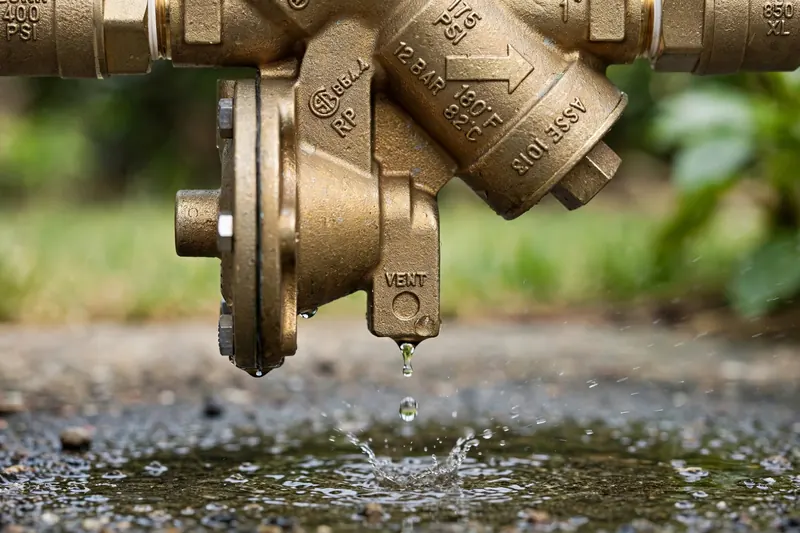
Match the Symptom to the Cause
Work through the list below and find the description that matches what you're seeing. When in doubt between two symptoms, treat it as the more serious one — a phone call costs nothing, and we'd rather talk you down from a worry than up from a surprise.
Drips or weeps only when a zone is running
The most common one. Usually debris — a grain of sand or scale — lodged under a check disc or seat, or a rubber disc that's hardened with age and no longer seals perfectly under flow. Often fixable with a cleaning or a rebuild kit, and it may or may not fail the annual test depending on severity. Worth scheduling before your test date.
Steady discharge from the RP relief valve
On a reduced-pressure assembly, the relief valve between the two checks opens when one of them isn't holding — that's its job. A constant stream (not the occasional spit during pressure fluctuations) means a check valve is leaking through. Shut the assembly's valves to stop the water loss and schedule the repair: this one won't pass a test, and it won't fix itself.
Spray from a split body or bonnet in spring
The Pacific Northwest classic. Water left in the assembly froze over winter, expanded, and cracked the brass — invisible until spring startup pressurizes the system. A cracked body can't be patched; it's a replacement, followed by the required initial test and filed report. See our winterization guide so it doesn't happen twice.
Weeping test cocks
The little capped ports on the side of the assembly seep or drip. Usually worn packing or O-rings on the test cock itself — a small fix, often handled during the annual visit. Mention it when you schedule so the tester brings the right parts.
Questions About This Topic
Is a leaking preventer an emergency?
Usually not — with one exception. A relief valve dumping water continuously on an RP assembly means a check isn't holding; shut the assembly's valves and call promptly. Drips and weeps can wait for a scheduled visit, but don't ignore them until test day. If the leak is at a test cock or a fitting rather than a check valve, it's a smaller job — but smaller doesn't mean never. Put it on the schedule within the month.
Can I just cap the relief valve to stop the leak?
No — never. The relief valve is the safety device that makes a reduced-pressure assembly what it is. Capping it doesn't fix the leak; it disables the protection. Shut the assembly's valves instead and schedule the repair.
Will a leaking assembly pass its annual test?
Almost certainly not — the test measures exactly what the leak demonstrates: whether the check valves hold. Get the repair done first, then test. That's the order the compliance process expects: fix, retest, file.
Should I shut off my home's water?
No — just the assembly's. Irrigation assemblies sit on their own branch, so closing the assembly's shutoff valves stops the leak without affecting the house. If you can't find those valves, the irrigation branch shutoff does the same job.
How fast should I act on a leak?
A relief valve dumping continuously: shut the assembly's valves and call promptly — that's a check valve not holding, and it won't improve. Drips and weeps: schedule a visit soon, ideally before your annual test date. Either way, leaks don't fix themselves; rubber doesn't un-wear.
Will a small leak turn into a big problem?
Usually, yes — gradually. Wear progresses, debris doesn't dissolve, and a weeping seal becomes a failing check valve. The cost curve favors acting early: a cleaning or rebuild kit now beats a replacement later, and it definitely beats a failed test with the PUD waiting on the report.
Need Backflow Help?
Call FlowGuard — tell us what's going on and we'll take it from there.